How to Choose Autonomous Haul Trucks for Mining?
Choosing Autonomous Haul Trucks is not simply an equipment purchase. It is a production, safety, and digital-infrastructure decision. A truck may appear efficient on a flat test road, then lose performance on steep ramps, wet benches, or poorly graded haul routes. Mine conditions matter.
The Global Mining Guidelines Group’s A Guide to the Implementation of Autonomous Mining stresses that successful deployment requires aligned technology, people, processes, and governance. Deloitte’s Tracking the Trends 2024 also identifies automation and data integration as important tools for improving mining productivity. These reports support a practical approach: evaluate the complete operating system, not only the truck’s advertised payload.
Start with measurable site requirements. Review payload targets, cycle times, fuel or energy use, tyre performance, road quality, and available network coverage. Check whether the trucks can communicate with dispatch systems, fleet management platforms, maintenance software, and existing equipment. Compatibility is often underestimated. It can become expensive.
Safety evidence deserves close examination. Ask for independent validation, emergency-stop performance, obstacle-detection limits, and procedures for mixed traffic with manually operated vehicles. The International Council on Mining and Metals promotes risk-based safety management and critical-control thinking, which can guide this assessment. Cybersecurity should also be tested before large-scale deployment.
Cost models must include training, control-room staffing, sensor replacement, software updates, connectivity, and planned downtime. A lower purchase price may not produce a lower operating cost. Pilot results may also disappoint. That is useful information, not failure. The best choice usually fits the mine’s long-term workflow, workforce capability, and expansion plan—not merely the newest technology.
Define the Mine’s Hauling Requirements and Operating Conditions
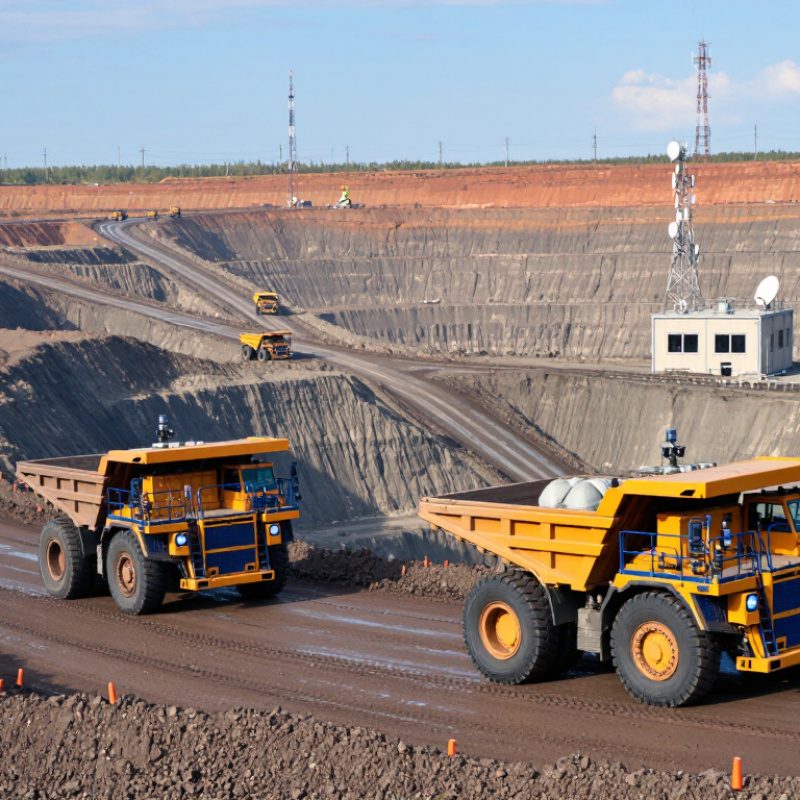
Choosing autonomous haul trucks starts with the mine, not the vehicle. Define material types, haul distances, gradients, payload targets, and daily production windows. Record actual cycle times during wet and dry seasons. A 12-kilometre route with loose waste behaves differently from a compact ore ramp.
Measure road width, turning radii, berm quality, dust levels, lighting, and communication coverage. Include loading delays and dump-point congestion. Small interruptions can reduce fleet output sharply. A neat spreadsheet can still hide a bad assumption.
The International Council on Mining and Metals reported 33 fatalities among member companies in its 2023 Safety Performance Report. That figure makes traffic separation, emergency response, and human-machine interaction essential design requirements. The U.S. Mine Safety and Health Administration recorded 40 mining fatalities in 2023, reinforcing the need to evaluate real site hazards before automation.
Define how people, light vehicles, graders, water trucks, and autonomous units will share the operating area. Test radio reliability behind rock faces and inside pits. Check whether the control system can handle temporary roads, changing stockpiles, and unexpected obstructions. It may not.
Use measured data to estimate fleet size. For example, calculate payload, average speed, queue time, and available operating hours across several shifts. Then challenge the result with poor-weather scenarios. Industry guidance from the Global Mining Guidelines Group emphasizes structured risk assessment, operational readiness, and progressive deployment. A controlled pilot may reveal problems that simulation misses.
Compare Payload, Powertrain, Range, and Road Performance
Payload should be judged against real haul profiles, not brochure figures.
A 240-tonne truck may lose capacity on steep ramps or weak ground. Compare rated payload with average payload, cycle time, and loading consistency. The Global Mining Guidelines Group’s autonomous haulage guidance stresses fleet integration, obstacle detection, and controlled operating zones. These factors often matter more than headline capacity.
Powertrain choice changes the entire operating model.
Diesel-electric systems offer rapid refueling and familiar maintenance. Battery-electric systems can reduce local emissions and noise, but charging time, thermal management, and battery degradation require careful planning. The International Energy Agency’s Global EV Outlook 2024 reports continuing improvements in battery energy density, yet heavy mining vehicles still face severe mass and duty-cycle demands. Range should include loaded climbs, weather losses, idle time, and reserve capacity.
Laboratory range is not site range.
Road performance deserves equal attention.
Measure braking distance, traction on wet haul roads, tire temperature, and speed consistency. Deloitte’s Tracking the Trends 2024 identifies operational data quality as a major technology barrier in mining. That warning is practical. Poor road data can make an autonomous system appear unreliable. Field trials should record payload variance, energy per tonne-kilometer, availability, and intervention frequency.
The neat spreadsheet usually lies.
A short ramp test may hide winter charging losses, dust exposure, or long queues at the crusher.
Recheck the assumptions.
Evaluate Autonomous Technology, Safety, and Fleet Coordination
How to Choose Autonomous Haul Trucks for Mining?
Autonomous haul trucks should be judged beyond driving accuracy. During field trials, observe how vehicles react to dust, poor visibility, uneven roads, and changing traffic. A reliable system should slow down safely when sensors disagree. It should also provide clear alerts that operators can understand quickly.
Safety depends on more than software. Check emergency stopping, manual takeover, pedestrian detection, and safe maintenance access. Ask for documented test results, incident procedures, and independent safety assessments. No system is flawless. A clean dashboard can still hide confusing warnings. Test realistic failures, not only perfect demonstrations.
Tips:
Start with a controlled route. Measure stopping distance, alert response, and recovery time. Train supervisors before expanding the fleet. Keep human oversight during early deployment.
Fleet coordination is equally important. Trucks must share location, speed, route status, and loading priorities without creating communication gaps. Compare actual cycle times, queue lengths, fuel use, and unplanned stops. A capable system should coordinate with shovels, loaders, dispatch tools, and road maintenance teams. Ask how it behaves when one vehicle leaves service. Can the remaining trucks adjust smoothly?
Review cybersecurity controls and access permissions with qualified specialists. Protect operational data and maintain audit records. My own preference is gradual deployment, although production pressure often encourages faster expansion. That pressure deserves resistance when safety evidence remains incomplete. Experience shows that small operational mismatches can become expensive delays. Live monitoring and regular human review remain necessary.
Assess Site Integration, Connectivity, Maintenance, and Training
How to Choose Autonomous Haul Trucks for Mining?
Autonomous haul trucks must fit the mine, not only the fleet plan. Start with site integration. Map haul roads, loading zones, gradients, traffic rules, and emergency access. A practical trial should include dust, rain, blind corners, and shift changes. These details expose weaknesses that simulations often miss. The Global Mining Guidelines Group recommends structured risk assessment and defined operational design domains for autonomous systems. Use that framework before purchasing equipment.
Connectivity deserves equal attention. Measure coverage beside pit walls, transfer points, and maintenance bays. Record latency, signal loss, and recovery time during a full shift. A truck that pauses safely is useful; one that reconnects unpredictably creates delays. The report “The Future of Connectivity” from Ericsson IndustryLab links reliable industrial connectivity with safer, more flexible operations, but mine conditions remain unusually harsh. Plan redundant communications and local fail-safe functions.
Maintenance and training decide long-term value. Store critical sensors, computing units, and communication parts near the workshop. Train technicians to diagnose software, electrical, and mechanical faults together. The Mining Industry Human Resources Council projects Canada’s mining sector may need over 70,000 new workers by 2029, showing why skills planning cannot wait. The World Economic Forum’s Future of Jobs Report 2023 estimates that 44% of workers’ skills may be disrupted within five years.
Tips: Run a staged pilot. Track availability, intervention frequency, maintenance hours, and training completion. Invite operators to challenge the design. Their criticism may reveal the expensive mistake.
How to Choose Autonomous Haul Trucks for Mining?
Before selecting a truck, assess whether the mine can support autonomous operations. The chart shows practical planning targets for site integration, connectivity, maintenance, and workforce training.
Targets shown are OEM-neutral planning benchmarks: 95% geofence and route readiness, 99.5% network availability, 90% preventive-maintenance completion on schedule, and 100% training completion for personnel assigned to autonomous operations. The framework is aligned with principles in ISO 17757 for autonomous and semi-autonomous machine systems.
Calculate Total Cost of Ownership and Select the Best Truck
Choosing an autonomous haul truck starts with more than its purchase price. The real question is how much one operating hour will cost across its working life. Build a total cost of ownership model with acquisition, financing, training, software, energy, tires, maintenance, infrastructure, insurance, and eventual resale value.
Use site data, not brochure estimates. Record payload, haul distance, road gradient, cycle time, weather delays, and loading efficiency. A truck carrying 220 tonnes may appear productive, but poor road conditions can reduce its hourly output sharply. Calculate cost per tonne moved, not only cost per hour. Include battery or fuel use under loaded and empty cycles. Small differences become significant after thousands of operating hours.
Maintenance planning needs careful testing. Ask for component life records, remote diagnostic performance, spare-parts lead times, and technician requirements. Review how the autonomous system handles mixed traffic, emergency stops, dust, and weak network coverage. Safety improvements may reduce downtime, but they should be measured with site evidence. Do not assume automation removes every labor cost; it changes skills, supervision, and training needs. A pilot on one haul circuit can expose hidden expenses, although a short trial may produce overly optimistic results. Recalculate the model using conservative utilization, higher tire wear, and delayed commissioning. The best truck is the one that delivers predictable cost per tonne without creating fragile operating dependencies.
How to Choose Autonomous Haul Trucks for Mining? - Calculate Total Cost of Ownership and Select the Best Truck
| Evaluation Metric |
Compact Autonomous Truck
90 t Payload |
Mid-Size Autonomous Truck
150 t Payload |
Large Autonomous Truck
220 t Payload |
| Operating and Productivity Assumptions |
| Rated payload |
90 t |
150 t |
220 t |
| Typical loaded cycle time |
18 min |
22 min |
28 min |
| Scheduled operating hours per year |
6,000 h |
6,000 h |
6,000 h |
| Effective productive hours per year |
5,000 h |
5,000 h |
5,000 h |
| Estimated annual material moved |
1.50 million t |
2.05 million t |
2.36 million t |
| Capital and Operating Cost Inputs |
| Truck acquisition cost |
US$1.80 million |
US$2.80 million |
US$4.20 million |
| Autonomous infrastructure allocation per truck |
US$0.35 million |
US$0.55 million |
US$0.80 million |
| Energy cost per operating hour |
US$42 |
US$58 |
US$78 |
| Maintenance and component cost per hour |
US$45 |
US$60 |
US$85 |
| Tires and undercarriage cost per hour |
US$14 |
US$22 |
US$32 |
| Supervision, connectivity, and software cost per hour |
US$14 |
US$16 |
US$18 |
| Autonomous fleet labor allocation per hour |
US$8 |
US$8 |
US$8 |
| Ten-Year Total Cost of Ownership |
| Total operating cost per hour |
US$123 |
US$164 |
US$221 |
| Ten-year operating cost |
US$7.38 million |
US$9.84 million |
US$13.26 million |
| Ten-year capital cost, including infrastructure |
US$2.15 million |
US$3.35 million |
US$5.00 million |
| Estimated ten-year TCO |
US$9.53 million |
US$13.19 million |
US$18.26 million |
| Estimated TCO per tonne moved |
US$0.64/t |
US$0.64/t |
US$0.77/t |
| Indicative selection guidance |
Best for narrow haul roads, smaller pits, and lower initial capital exposure. |
Balanced option for high-volume operations and mixed haul profiles. |
Best where haul routes, loading tools, and road strength support maximum payload. |
Calculation basis: TCO includes truck acquisition, allocated autonomous infrastructure, energy, maintenance, tires and undercarriage, software/connectivity, and autonomous fleet labor over a 10-year period. Annual production is calculated as payload × 5,000 productive hours × 60 ÷ cycle time. Figures are generic planning benchmarks in 2026 US dollars and exclude financing, taxes, inflation, residual value, major mine development, and abnormal ground conditions.