Why Invest in Autonomous Haulage for Your Supply Chain?
The landscape of supply chain management is evolving rapidly. Companies are exploring innovative solutions to enhance efficiency. Autonomous Haulage is at the forefront of this transformation. This technology not only increases operational efficiency but also significantly reduces costs. According to a report from McKinsey, automation can improve logistics productivity by up to 30%.
The adoption of Autonomous Haulage is not without challenges. Reliability and safety remain primary concerns for many organizations. However, industry leaders report that early adopters of Autonomous Haulage experience fewer downtime incidents. For instance, a study by Deloitte shows a potential reduction in labor costs by 20% when integrating autonomous vehicles. This potential demonstrates the need for a careful evaluation before widespread implementation.
Nevertheless, as the technology matures, it presents an invaluable opportunity for businesses to enhance their supply chains. Striking a balance between risk and innovation is essential. Collectively, the industry must address these challenges to fully harness the potential of Autonomous Haulage.

Benefits of Autonomous Haulage in Modern Supply Chains
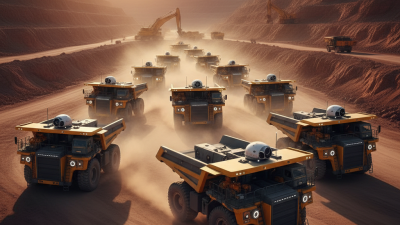
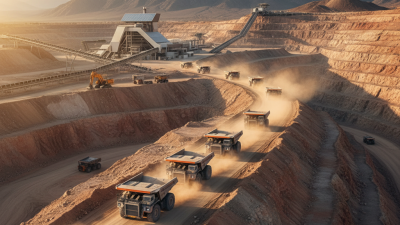
Autonomous haulage is revolutionizing modern supply chains. It offers significant benefits that can enhance efficiency and productivity. By utilizing automated trucks and vehicles, companies can reduce labor costs substantially. These machines operate continuously, minimizing downtime. They also improve safety by removing human error from hazardous environments.
Another key benefit of autonomous haulage is real-time data collection. Automated systems can gather and analyze data on routes, loads, and maintenance needs. This insight allows companies to optimize operations and respond quickly to changes. Fleets that utilize autonomous haulage can adapt strategies based on real-time analytics. This adaptability leads to smarter decision-making.
However, implementing such technology is not without challenges. High upfront costs and potential job displacement are concerns. Companies must weigh these factors carefully. Transitioning to fully autonomous systems requires substantial investment in training and infrastructure. Reflection on these complexities is essential to achieve long-term success in supply chain operations.
Cost-Effectiveness of Implementing Autonomous Haulage Solutions
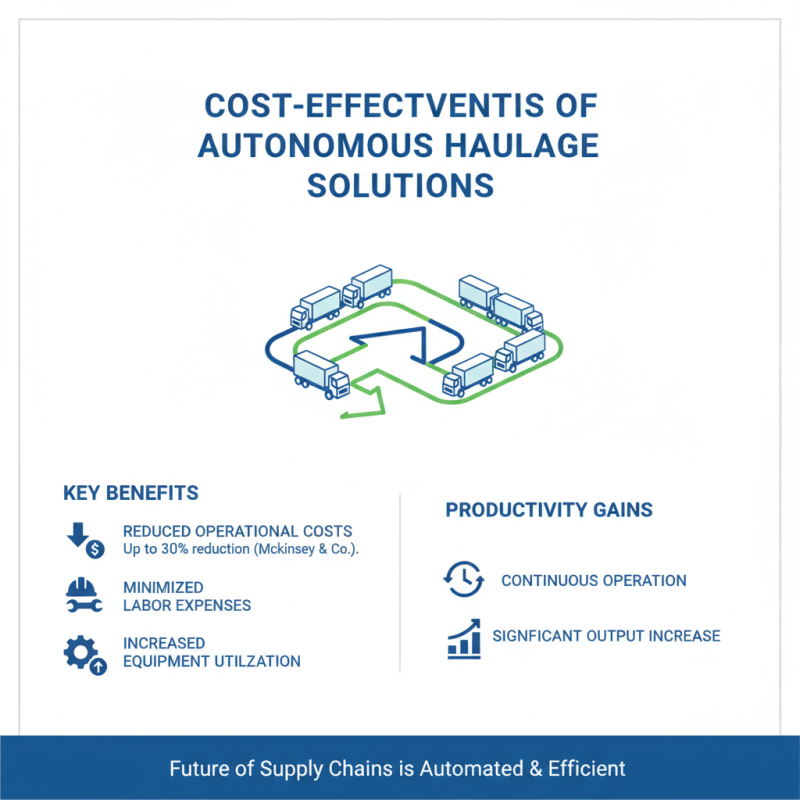
The implementation of autonomous haulage in supply chains is increasingly recognized for its cost-effectiveness. A report by McKinsey & Company highlights that companies can reduce operational costs by up to 30% through automation. This is achieved by minimizing labor expenses and increasing equipment utilization rates. Plus, autonomous systems can operate continuously, leading to significant productivity gains.
Moreover, a study from the International Data Corporation (IDC) shows that organizations using autonomous vehicles can improve their supply chain efficiency by 40%. This efficiency not only lowers costs but also accelerates delivery times. However, businesses must consider the initial investment. The upfront cost can be substantial, presenting a barrier for some.
There are risks too. Integration challenges can arise, especially in existing infrastructures. Training staff to work alongside autonomous systems is crucial yet often overlooked. Companies need to reflect on these factors to make informed decisions. Balancing costs with potential benefits will be vital for long-term success in a rapidly evolving landscape.
Impact of Autonomous Haulage on Supply Chain Efficiency and Productivity
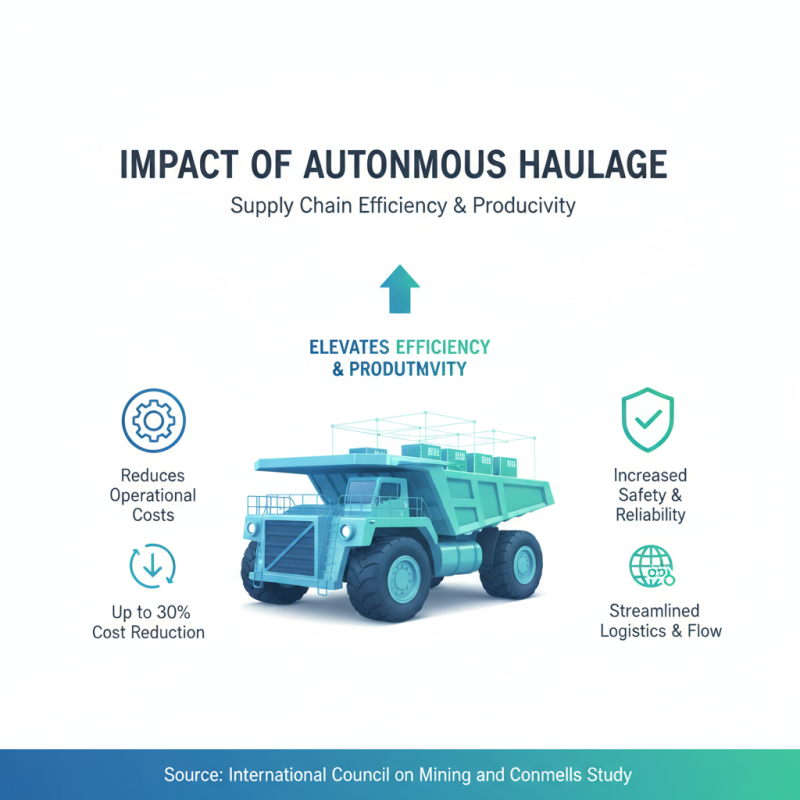
As industries evolve, the integration of autonomous haulage systems is transforming supply chains. Autonomous haulage can elevate efficiency and productivity significantly. According to a study by the International Council on Mining and Metals, companies can reduce operational costs by up to 30% through automation.
Utilizing self-driving vehicles leads to enhanced precision in logistics. For instance, these vehicles can operate around the clock without fatigue. Data from a recent report by McKinsey suggests autonomous systems can boost transportation capacity by 50%. This increase directly correlates to more streamlined operations. However, transitioning to autonomous haulage is not without challenges. Companies must address potential job displacement and the need for new skill sets among workers.
Moreover, the initial investment can be substantial. A report from Deloitte indicates that companies could face upfront costs exceeding millions. This significant financial commitment can delay the adoption process. Organizations also need reliable data management systems to fully realize autonomous haulage's benefits. Without proper integration, operations might face disruptions. Thus, careful planning and execution are essential for maximizing the potential of autonomous haulage in your supply chain.
Technological Advancements Driving Autonomous Haulage Adoption
The rise of autonomous haulage systems is reshaping supply chains. Technological advancements play a crucial role in this trend. Innovations in artificial intelligence, sensors, and machine learning boost efficiency and safety. These systems can navigate complex environments with precision. They reduce the need for manual intervention, thereby enhancing productivity.
Investing in autonomous haulage means embracing change. Companies face challenges during the transition. There are risks, including initial costs and integration issues. Training personnel is essential. However, the potential benefits outweigh these hurdles. With lower operational costs and increased throughput, businesses can thrive in competitive markets.
As technology evolves, so do the opportunities. Real-time data analytics improve decision-making. Companies can better manage logistics and inventory. This efficiency is attractive in a fast-paced world. Nevertheless, understanding potential pitfalls is vital. An imperfect implementation can lead to disruptions. Therefore, careful planning is essential before committing to autonomous systems.
Investment Trends in Autonomous Haulage Technology
This chart illustrates the projected investment in autonomous haulage technology over the next five years, highlighting key factors driving adoption.
Future Trends and Challenges in Autonomous Haulage for Supply Chains
Investing in autonomous haulage systems (AHS) is a forward-thinking move for supply chains. These systems promise to increase efficiency and reduce operational costs. Data from the International Federation of Robotics projects that the logistics sector can save 30% in transportation costs through automation. However, transition challenges exist.
Future trends indicate a growing reliance on AHS. By 2030, a shift towards full automation is expected. Yet, companies must address the high upfront investment and technology integration hurdles. Reports show that 25% of businesses cite workforce resistance as a major challenge. This resistance highlights the importance of change management strategies.
Tips: Foster employee engagement through training. Demonstrating benefits can ease concerns. Also, conduct a thorough cost-benefit analysis before implementation. Proper planning can make a significant difference in smooth transitions. Consider the implications of relying solely on technology. Balancing automation with human oversight might yield better results in the long term.